Rethinking Bourdieu: Two Lectures on Field and Habitus
At the heart of Pierre Bourdieu’s sociological legacy lie two concepts: the field (champ) and the habitus. Throughout his career, Bourdieu announced — and continually postponed — a general theory of these concepts, no doubt because the very idea of a unified theory receded as each empirical investigation re-enacted the concept anew. This two-session seminar revisits that unfinished theoretical project. Drawing on Bourdieu’s posthumous Microcosmes. Théorie des champs (2021), on his structuralist reading of Weber, on Erwin Panofsky’s essay on Gothic architecture, and on Bourdieu’s Algerian fieldwork, the lectures offer a critical reflection on the origins, tensions, and limits of the concepts of field and habitus.
Lecture 1 — What Is a General Theory in the Social Sciences?
The first session approaches Bourdieu’s field theory as an “unfinished quest.” Recalling that Microcosmes is in fact a well-founded fictional reconstruction, Fabiani follows Bourdieu’s placement of the religious field as the matrix of all fields, and traces the successive treatments of haute couture, literature, law, economics, and politics. The decisive issue is the tension between the One and the Many: the relative autonomization that constitutes each particular field appears to contradict the search for a structural homology among all fields. On this reading, a general theory of fields is, strictly speaking, impossible — for it would dissolve the very historical phenomenon that gave rise to it: the growing differentiation of social spaces in modernity.
The lecture situates Bourdieu in dialogue with Durkheim, Weber, Norbert Elias, and Karl Polanyi, and uses Neil Fligstein and Doug McAdam’s “strategic action fields” as a critical counterpoint. The persistent tension between Bourdieu’s economic lexicon (market, capital, monopoly) and his lifelong critique of economism is examined, as are his treatment of the genesis, transformation, and heteronomization of fields, and the relative neglect of external shocks, collective action, and contextual uncertainty. The argument that emerges is that the field concept is most powerful as a principle for constructing the object — and that its scope contracts whenever the drive toward abstract generalization overtakes empirical density.
Lecture 2 — What’s Wrong with the Habitus?
The second session reopens Bourdieu’s signature concept through an exercise in intellectual archaeology. From Aristotle’s hexis through Boethius’s Latin translation, Aquinas’s Scholastic appropriation, and Leibniz’s habitudines, the concept’s long lineage is traced; its more elusive uses in Weber, Durkheim, Mauss, Mannheim, and Elias are then contrasted with the central role Bourdieu assigns it as the principal operator of a theory of practice. A turning point, Fabiani argues, is Bourdieu’s 1967 afterword to Erwin Panofsky’s Gothic Architecture and Scholastic Thought, where the notions of structural homology and transposability become constitutive of the theory.
The lecture then unpacks the canonical definition of habitus — “structured structures predisposed to function as structuring structures” — and exposes two of its limits. The first is what may be called Bourdieu’s “scholastic-centrism”: the implicit universalization of an internalization model drawn from school and monastic-style total institutions. The second is the unresolved tension between passive synthesis (Husserl) and pre-reflective practical adjustment (Merleau-Ponty). Drawing on the mature definition in Pascalian Meditations, on Bourdieu’s late return to the Algerian misalignments between disposition and structure, and on the notion of a “split habitus,” the lecture proposes that habitus be reread less as a universal mechanism than as a situated resource — opened up to embodied knowledge, structures of opportunity, and the irregularities of play, that is, to permanent invention.
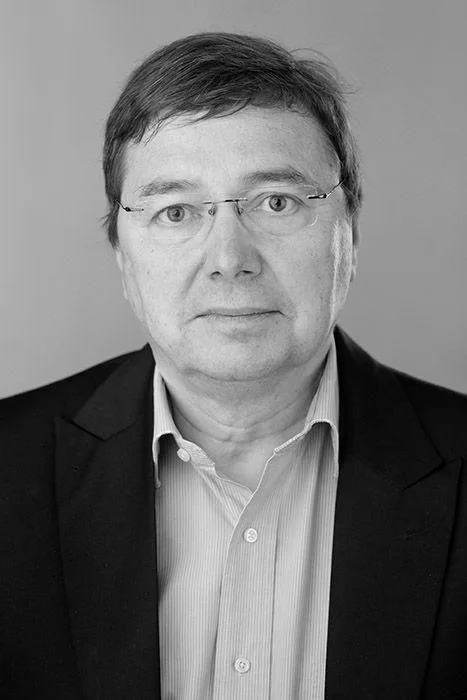
Jean-Louis Fabiani is Professor of Sociology at Central European University and at the École des Hautes Études en Sciences Sociales (EHESS) in Paris. One of the most incisive readers of the French sociological tradition, his work spans the sociology of culture, the sociology of knowledge, and the theoretical debates that have followed Bourdieu. He is the author of Pierre Bourdieu. Un structuralisme héroïque (Seuil, 2016), among many other studies on field theory, habitus, and the limits of generalization in the social sciences.