Body, Brain, and Society: A Psychological and Neuroscientific Journey
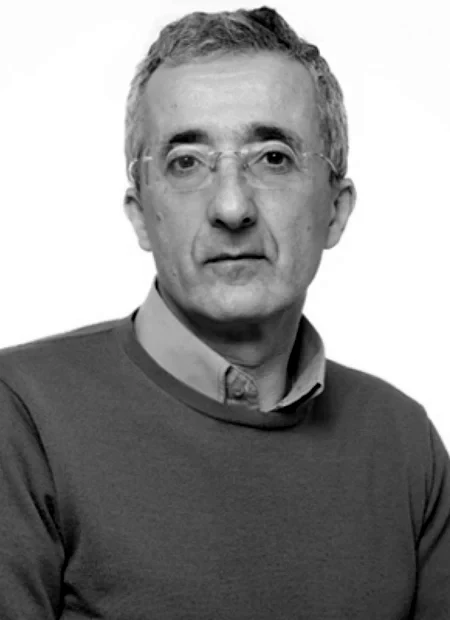
Hekimbaşı Center for Advanced Studies is pleased to host a seminar series by Salvatore Maria Aglioti, one of the leading figures in social and cognitive neuroscience. Aglioti is Professor of Psychobiology and Neuroscience at Sapienza Università di Roma and is internationally recognized for his work on how the body is represented in the brain and how bodily signals shape self-consciousness, empathy, and social behaviour.
The six lectures present an integrated view of the human mind grounded in the continuous interaction between the brain, the body, and the social world. Drawing on more than three decades of research spanning cognitive neuroscience, neuropsychology, social psychology, neurophysiology, and experimental neurology, the seminars examine how bodily and visceral signals shape perception, action, emotion, morality, and interpersonal behaviour. A central theme is that the body is not merely the object of neural representations but an active constituent of cognition and social experience.
The seminars begin by introducing the principles of embodied social neuroscience, emphasizing how perception and understanding of other people emerge from the interaction between sensorimotor, affective, and autonomic processes. Observing others’ actions, emotions, pain, and touch recruits neural mechanisms partially shared with first-person experience, providing the biological foundations for empathy, imitation, cooperation, and social learning.
A historical perspective follows, showing how careful observations of neurological and psychiatric patients anticipated many concepts that have only recently become accessible through modern neuroimaging and neurophysiological techniques. Disorders affecting body ownership, awareness, agency, and self-consciousness reveal the organization of cerebral mechanisms underlying bodily experience and illustrate how the study of brain lesions continues to provide unique insights into the architecture of the human mind.
Building upon these foundations, the seminars explore how the brain constructs dynamic representations of the body that support movement, perception, aesthetics, and social cognition. Rather than being fixed, body representations are continuously reshaped by multisensory integration and interactions with other individuals. Particular attention is devoted to experimental paradigms investigating the malleability of bodily self-consciousness — including enfacement, gaze-mediated self–other integration, and respiratory interpersonal coupling (embreathment) — which demonstrate that the boundaries between self and others are remarkably flexible.
The lectures then examine the plasticity of body representations in both health and disease. Research combining behavioural methods, neuropsychology, virtual reality, non-invasive brain stimulation, and psychophysiology shows that bodily experience can be profoundly modified through learning, rehabilitation, sensory manipulation, or neurological injury, with important implications for motor recovery, chronic pain, and the restoration of body awareness.
Moving beyond perception and action, the seminars address the role of embodiment in higher-order psychological functions. Moral judgements, empathy, social attitudes, and even spiritual experiences are increasingly recognized as emerging from interactions between bodily states, emotions, and cognitive processes rather than from abstract reasoning alone. Altering bodily self-consciousness can influence prosocial behaviour, implicit social evaluations, and ethical decision-making, highlighting the intimate relationship between corporeal experience and the construction of human values.
The final lectures focus on one of the most rapidly evolving frontiers of neuroscience: the contribution of visceral physiology to cognition and emotion. Signals arising from the heart, lungs, gastrointestinal tract, and other internal organs continuously influence perception, attention, memory, emotional experience, and decision-making. Recent work further demonstrates that the integration of motor and visceral information contributes to interpersonal coordination and collective behaviour, revealing that successful social interaction depends not only on synchronizing movements but also on dynamically coupling internal bodily states across individuals.
Taken together, the seminars offer a unified framework in which the body, the brain, and the social environment form an inseparable system, and highlight the broader implications of this research for mental health, neurorehabilitation, human interaction, and the emerging science of embodied and socially situated cognition.
The seminars will consist of six lectures:
Friday, 18 September — The body and the social brain: introduction to embodied social neuroscience · The neuro-psychiatric body before the era of functional imaging
Saturday, 19 September — Cerebral representations of the body: form, action, and beauty · The plastic body in health and disease
Sunday, 20 September — Embodying the ineffable: the spiritual and the moral body · The mind from within: visceral roots of human cognition and emotion
Readings will be circulated to admitted participants in advance of the seminar.
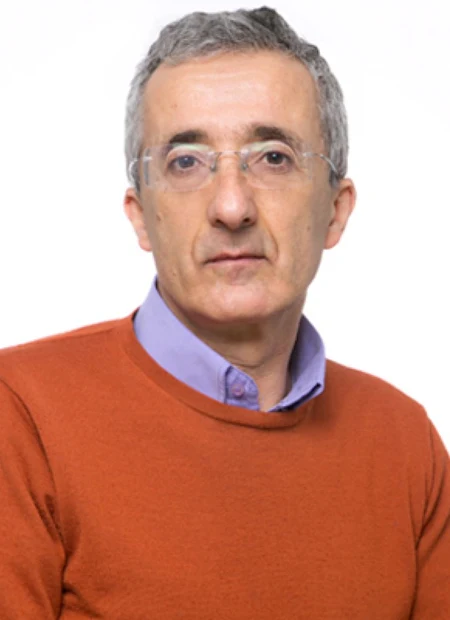
Salvatore Maria Aglioti is Professor of Psychobiology and Neuroscience at Sapienza Università di Roma, where he founded and directs the Social and Cognitive Neuroscience Laboratory. He is also a senior researcher at the Italian Institute of Technology's Center for Life Nano- & Neuro-Science at Sapienza and at the Santa Lucia Foundation IRCCS in Rome. His research addresses how the body is represented in the brain and how bodily and visceral signals shape self-consciousness, empathy, moral judgement, and social interaction. Over more than three decades he has combined neuropsychological studies of patients with lesion mapping, non-invasive brain stimulation, psychophysiology, and immersive virtual reality, producing influential work on corporeal awareness, embodied expertise in action observation, the neural bases of empathy for pain, and the malleability of the bodily self. His current work focuses on interoception and the contribution of internal organ signals to cognition and interpersonal coordination.